
From Employee to Driving Instructor: Stan’s Journey Into a New Career
- Christopher Cook
- Mar 7
- 20 min read

Many people reach a point in their career where they begin asking themselves a difficult but important question. Is this still the right path for me, or is there another way of working that might offer more flexibility, more independence, and a better balance between income and life outside work?
For some people, that question arrives suddenly after a major event or a bad patch at work. For others, it develops more quietly over time. The days begin to feel repetitive, the diary feels like it belongs to somebody else, and the idea of creating a different kind of working life starts to become more appealing. That does not necessarily mean they dislike their current role. In many cases, they may be good at it, successful in it, and reasonably settled. Even so, there can still be a growing sense that something needs to change.
This article follows the story of Stan, who finds himself in exactly that position. Stan is doing well in his current job. He is respected at work, performs well, and genuinely enjoys much of what he does. However, he has reached a stage where he wants more control over his future. He wants the opportunity to create a better work life balance, to be his own boss, and to have a clearer link between the work he puts in and the money he earns.
Stan has always loved driving. He enjoys the freedom of being on the road, takes pride in driving well, and has always been somebody who naturally gets on with people. He is patient, approachable, and open to learning new things. Those qualities do not automatically make somebody a driving instructor, but they do make the idea feel realistic.
For Stan, becoming a driving instructor is not a fantasy or a snap decision. It is a serious career change that he begins to explore carefully, sensibly, and with a healthy respect for the amount of work involved.
A Note From the Instructor Writing This
This article is written from the perspective of an experienced driving instructor and trainer at DTMK Driving School in Milton Keynes. Supporting learners on their journey to test is a core part of the job, but so is helping new instructors work through the process of becoming professionally qualified.
Stan’s story is not a made up sales narrative designed to make the profession sound easy. It is closely based on the real experiences of a current trainee instructor working through the qualification process today. The name has been changed, but the broad shape of the journey, the delays, the preparation, the frustrations, and the support all reflect real experiences that are happening now.
That matters, because becoming a driving instructor in the current climate involves more than simply passing a few tests. It involves navigating a national shortage of test appointments, understanding the realities of teaching learners in a busy and often pressured environment, and building a professional approach that will stand the test of time. Any honest article about the profession needs to reflect that reality rather than glossing over it.
Considering a Driving Instructor Career?
For some readers, Stan’s story may already feel familiar. They may not be unhappy in their current job, but they may be questioning whether it is the right long term fit. They may enjoy driving, like working with people, and want a career that offers more control over their own time and earning potential.
That does not mean everybody in that position should immediately hand in their notice and rush into instructor training. In most cases, a better approach is the one Stan takes. Start by asking questions, gather a realistic picture of the process, and work through the early stages while still keeping life stable. A career change is a big decision. It is far better to enter it with open eyes than to be swept along by a vague promise of freedom and income.
At DTMK Driving School, the support offered to trainee instructors is designed around that reality. People are encouraged to understand the process, take the stages seriously, and develop at a sensible pace. The aim is not to push people through quickly. The aim is to help them become capable, confident, and professional instructors who are building something sustainable. That approach reflects the wider DTMK model, which is built around instructor autonomy, strong standards, active support, and long term professional partnership rather than rushed volume expansion.
How Do You Become a Driving Instructor in the UK?
The process of becoming a driving instructor in the UK is set by the Driver and Vehicle Standards Agency. To qualify as an Approved Driving Instructor, usually shortened to ADI, candidates must pass three stages. These are commonly known as Part 1, Part 2, and Part 3.
The first stage is the instructor theory test. This is not identical to the theory test taken by learner drivers, and it demands a more developed understanding of road safety, rules, hazard awareness, and the theory that underpins safe driving. For somebody coming back to formal testing after many years, it can feel unfamiliar at first.
Stan begins in a very practical way. He downloads a revision app onto his phone and starts working through the questions in spare moments during the day. He does not make a grand performance of it. He simply starts. A few questions at lunch. A few in the evening. A mock test at the weekend. That regular pattern begins to build momentum.
Alongside the app, he borrows some recommended books from DTMK. This gives him a broader and deeper understanding of the material. The app is useful for repetition and for getting used to the format of the questions, but the books help him understand the subject properly rather than simply memorising answers. That makes a difference, especially for somebody who wants to enter the profession with the right mindset.
Importantly, Stan does not rush to book the test at the first possible opportunity. He waits until he is regularly passing mock theory tests and feels confident that he can perform consistently rather than just hoping for a lucky day. That decision pays off. When the time comes, he takes the real test and passes first time.

The cost at this stage is modest. His study app costs about five pounds, and then there is the official DVSA test fee. For a potential career change, it is a surprisingly accessible first step. More importantly, it allows Stan to test his commitment. Passing Part 1 gives him confidence, but it also confirms that he is prepared to put the work in properly.
Preparing for the Part 2 Driving Ability Test
The next stage is the Part 2 driving test. This is where many people discover that being an experienced driver is not quite the same as being ready for a high standard driving assessment.
Stan has been driving for years. He is comfortable on the road and would describe himself as a good driver. Even so, he understands that the habits of everyday driving and the standard expected by a driving examiner are not always identical. He also knows that it has been many years since anybody formally assessed his driving. That matters.
When he books his Part 2 test, he runs into one of the realities affecting the whole industry at the moment. His booking is placed on hold. This reflects the wider shortage of test capacity that continues to affect both learner tests and instructor qualification tests. For Stan, the wait turns out to be around five months. That is frustrating, but it is also simply the current reality. Anybody entering the profession now needs to understand that delays are part of the process.
Eventually, the DVSA allocates him a date. Fortunately, he is able to rearrange his diary and make it work. At that point, he decides to get some professional support rather than relying entirely on his own judgement. He books lessons with Christopher at DTMK Driving School so that he can prepare properly and understand the way examiners assess the test.
Before those lessons even begin, Stan starts revising some of the things that often catch people out. He studies the show me and tell me vehicle safety questions carefully so that he is not caught off guard by something basic on the day. He also starts paying far more attention to one of the most common weak areas in driving tests, mirror checks.
This is where home life becomes unexpectedly useful. Stan asks his wife to watch him every time they drive somewhere together. He tells her to point it out whenever he fails to demonstrate proper mirror use. That arrangement becomes a slightly humorous part of daily life, but it serves a serious purpose. It creates accountability, repetition, and awareness.
During his lessons with Christopher, the preparation is practical and realistic. They drive extended test style routes so Stan can experience the way an examiner will view the drive. They revisit manoeuvres, observation routines, and general driving discipline. Stan also rediscovers that some of the skills he once took for granted have become less sharp over time. He has a driveway at home and a large car park at work, which means he has not had to parallel park regularly for years. That is not unusual, but it does mean the skill needs refreshing.
In total, Stan completes about twelve hours of driver training with Christopher. The purpose is not to turn him into somebody different. It is to make sure that his driving is not merely good in general terms, but clearly good enough in the specific way the DVSA examiner will assess it.
Passing the Part 2 Test
By the time the test date arrives, Stan feels ready. He is still nervous, because that is only natural, but he is no longer guessing what will happen. He has put in the work, understands the standard, and knows what he needs to demonstrate.
The drive itself goes well. There are a variety of roads, different traffic conditions, and the usual pressure that comes from being watched and marked. At the end of the test, he receives the result he wanted. He passes.
Even better, he passes with just one driver fault. The fault comes from an unusual but memorable situation. When crossing a humpback bridge on a road where there are warnings for pedestrians, he does not sound the horn. That is enough to earn a minor fault, but nothing more. The rest of the drive is strong.
For Stan, this is a huge milestone. It confirms that he has the driving standard needed to move forward. It also reinforces the value of preparing properly rather than assuming experience alone would be enough.
Training to Become a Driving Instructor in Milton Keynes and Surrounding Areas
Once Stan has passed Part 2, the journey begins to change in character. Up to this point, the focus has been on his own knowledge and his own driving. From here onward, the real question becomes whether he can teach.
He now has two options. He can either book the Part 3 test straight away, or he can continue developing his instructional skills before attempting the final assessment. The Part 3 test focuses entirely on teaching rather than driving ability. During the assessment, the examiner observes a real lesson and evaluates the instructor against the National Standard for Driver and Rider Training. This includes areas such as lesson planning, risk management, and the way the instructor helps the learner understand what is happening and make safe decisions. In simple terms, the test is designed to answer a straightforward question: can this person teach driving safely and effectively, not just drive well themselves?
Stan thinks carefully about what comes next. He knows he has already invested time and energy into the process. He also knows that teaching will be completely new to him. He does not want to rush towards the final test under prepared and risk wasting the opportunity.
Christopher arranges for Stan to work with an ORDIT registered instructor and begin the next stage of formal development. That starts with forty hours of training. These hours are not about his own driving. They are about learning how to teach, how to structure lessons, how to communicate clearly, and how to manage learner development.
This is where Stan begins to understand that driving instruction is not just a job for somebody who likes cars or enjoys driving around all day. It is a teaching profession. He has to learn how to assess a learner’s ability, how to pitch explanations at the right level, how to decide when to intervene and when to let a learner think through a problem, and how to keep people safe without damaging their confidence.
During this phase, he also experiences teaching real learners while under supervision. That is hugely valuable. It gives him an early sense of what the role actually feels like, rather than what he imagined it might feel like. He starts to appreciate that learner progress is rarely a straight line. Some days are excellent. Some days confidence seems to dip without warning. Sometimes a learner appears to master a skill and then struggles with it again the following week. Learning to understand that pattern is part of becoming an instructor.
Christopher also arranges for much of Stan’s development work to take place at weekends. This is important because Stan is still in his existing job at this stage. The training is therefore designed to work around his current commitments rather than forcing an all or nothing decision too early.
Starting Work as a Trainee Driving Instructor
After completing the first forty hours of instructor training, Stan reaches an important decision point in the process. At this stage the rules allow two possible routes towards the final Part 3 qualification.
One option is to apply for the trainee instructor licence, often referred to as the pink badge. This allows Stan to begin teaching real learners while continuing his preparation for the Part 3 instructional ability test. However, working under the trainee licence involves an important condition. A specific percentage of the lessons delivered must be supervised by a qualified instructor. That supervision requirement is designed to protect learners and ensure that trainee instructors continue developing safely, but it can also make diary planning slightly more complicated because some lessons must be arranged to allow that oversight to take place.
The alternative route is to complete an additional twenty hours of instructor training before attempting the Part 3 test. By committing to those extra development hours, a trainee can go directly towards the final assessment without working under the supervised lesson requirement. For some people this route offers greater flexibility because it avoids the need to schedule supervised lessons while they are building their diary.
Stan considers both options carefully. On one hand, the trainee licence would allow him to start gaining real experience with learners sooner. On the other hand, he recognises that teaching is still a new skill and that additional training could strengthen his chances of passing the Part 3 test successfully. Like many people entering the profession, he chooses to continue developing his teaching skills before attempting the final assessment. Teaching is still new to him, and the opportunity to continue growing while working feels like the right balance.
He decides to apply for the trainee instructor licence. In the industry, this is known as the pink badge because of its colour. Once it arrives, he will legally be able to charge for lessons while continuing to work towards full qualification.
When the pink badge does arrive, the shift is significant. This is no longer just a training exercise in the background of his existing life. It becomes the beginning of a genuine career transition.
At this stage, DTMK Driving School offers Stan a temporary franchise style arrangement while he develops his experience. The principle behind this arrangement is support without micromanagement. Stan remains fully self employed. He keeps control of his diary, his availability, and the pupils he accepts. DTMK provides support, advice, brand protection, learner enquiries, and professional structure, but the instructor remains in charge of their own business decisions. That is a key feature of the DTMK model.
This is also the point where practical details begin to matter. Stan needs a car, and he arranges a short term lease through one of DTMK Driving School’s vehicle contacts. He also needs the professional tools and standards that come with the role. DTMK supports instructors with branded uniform, professional identification, removable magnetic signage, and the illuminated roof box that gives the vehicle a clear working identity. There is also a requirement for a proper dash cam system with forward, rear, and interior coverage, not as a surveillance gimmick but as a safeguard for the instructor, the learner, and the wider professional environment.
Safeguarding and first aid matter too. New instructors within the DTMK model are expected to hold suitable safeguarding and first aid standards, with Level 2 Safeguarding and Emergency First Aid at Work forming part of the minimum expectation. These requirements exist because the role carries responsibility, not just because they look good on paper.
At that point, Stan takes the plunge. He hands in his notice at work and steps into the profession properly.


The Reality of Instructor Income and Working Hours
One of the reasons Stan was drawn to the role in the first place was the possibility of controlling his own income. That remains true, but he quickly learns that the reality is a little more nuanced than simply multiplying an hourly rate by every available hour in the day.
At DTMK Driving School, the standard price for a two hour lesson is £80. On paper, it can be tempting to look at that figure and imagine a full diary from morning to evening. In reality, especially for a new instructor, teaching is mentally demanding work. Every lesson involves constant observation, risk assessment, planning, communication, and reflection. The instructor is not just sitting in the passenger seat. They are analysing the learner’s decisions, watching the road environment, anticipating problems, and deciding how best to support progress at the same time.
Because of that, most Potential Driving Instructors do not begin by teaching eight hours a day. They could attempt it, but it would not necessarily be wise. New instructors need space between lessons to think, review what happened, record notes properly, and plan the next step for each learner. Most trainees therefore work on the basis of about four to six hours of lessons spread across the day.
This does not mean the income potential is poor. It simply means that the early stage should be approached realistically. There is also scope to work across six days for those who want to recoup training costs faster or increase their earnings more quickly. Even then, there is a need for balance. Time off matters. Rest matters. Reflective time matters.
As confidence and experience grow, working patterns often change. Many established instructors eventually aim to work closer to eight teaching hours a day across five days a week. Some also choose to offer extra availability on a sixth day when they wish to boost income or respond to particularly high demand. The important point is that this becomes a personal choice rather than an imposed expectation.
For Stan, this is one of the genuine attractions of the profession. The role can evolve with the person. An instructor can shape their week around their own priorities, whether that means maximising income, protecting family life, or finding a careful balance somewhere between the two.
Discovering That Teaching Is a Skill in Its Own Right
Perhaps the biggest change in Stan’s understanding comes when he realises just how different teaching is from driving.
Before beginning the process, he assumed the hardest part would be reaching the required driving standard. Passing Part 2 proves that he can do that. What comes afterwards is something entirely different.
A good instructor has to do far more than explain the controls of the car. They have to read the learner, judge the learner’s emotional state, understand how much information the learner can process in the moment, and adapt their teaching style accordingly. Some learners are naturally analytical and like detailed explanations. Others are overwhelmed by too much talking and need time, repetition, and reassurance. Some arrive full of confidence. Others are frightened before the engine is even started.
Stan begins to understand that the best teaching often involves asking the right question at the right time rather than giving a stream of instructions. He learns how to encourage learners to think, how to develop awareness instead of dependency, and how to help somebody make better decisions for themselves. He also learns that calmness matters enormously. When a learner makes an unexpected mistake, the instructor must keep the car safe and then explain what happened without crushing the learner’s confidence.
That is why Part 3 matters so much. It is not simply another obstacle in the process. It is the stage that tests whether a person can genuinely teach.
At DTMK, that educational element is taken seriously. Driving instructors are seen not just as vehicle specialists, but as professional educators. For those who become fully qualified and continue developing within the wider DTMK network, there may also be opportunities over time to undertake further qualifications in education and training through DTMK Training Services. That reflects the school’s broader view of professional development as an ongoing process rather than something that ends once the DVSA tests are passed.
The Realities of Teaching Learners Today
Once Stan begins teaching real learners, another side of the profession becomes very clear. This job carries emotional weight.
A learner’s driving test is not a trivial event. For many people, passing changes their life in practical and immediate ways. It can affect work opportunities, family responsibilities, education, and independence. That means instructors often feel a strong sense of responsibility for helping learners reach the required standard.
Stan feels that responsibility keenly. When a learner progresses well, he shares their excitement. When a learner passes, he feels proud. When somebody falls short and then faces the prospect of a long wait for another test because of the national shortage, he feels that frustration too.
This is one of the under discussed realities of the profession. Instructors are not emotionally detached from their pupils. Good instructors care. That care is part of what makes the work meaningful, but it also means the job can be draining at times.

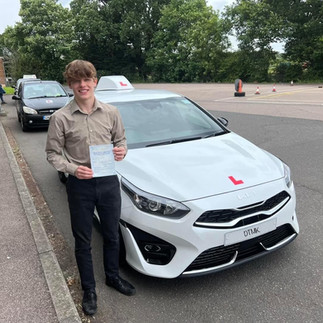


Support matters enormously during this stage. Stan and Christopher exchange messages regularly. Sometimes the support is about a practical issue with a pupil. Sometimes it is a quick sense check about a lesson decision. Sometimes it is simply reassurance that a frustrating day is part of the normal learning curve. They also speak on the phone and meet for coffee from time to time, which gives Stan a chance to reflect and keep growing without feeling isolated.
Alongside that, Stan continues his development with his ORDIT trainer and completes the further twenty hours of training that prepare him for Part 3. By now he is not just learning in theory. He is connecting that training directly to real lessons and real pupils.
Navigating the Current Test Shortage
Throughout Stan’s journey, the current shortage of driving test appointments remains a constant factor. It affects his Part 2 test, his Part 3 test, and the learners he teaches.
This is important to say clearly, because an honest case study should not pretend that progress through the profession is always smooth. Stan passes Part 2 and continues working, but six months into his trainee licence he still has not been able to take his first attempt at Part 3. The delay is not because he is avoiding it or because he is not ready. It is because the system is under pressure.
That is frustrating. It is frustrating for Stan, who wants to move forward. It is frustrating for trainees more broadly, who may feel their progress is being held up by factors outside their control. It is also frustrating for learners, who face their own delays when tests are hard to come by.
At the same time, there is a practical side to this extra waiting period. Stan gains more experience. He teaches more pupils. He encounters more varied situations, more different personalities, and more of the emotional and practical realities of the job. The additional time becomes useful even while it remains irritating.
Christopher supports him in applying for a further trainee licence while he waits for his test, which again reflects the current reality of the system. The journey is not always quick, but with the right support it can still keep moving forward.
Eventually, a test date is allocated. At the time of writing, Stan is completing refresher sessions with both Christopher and his ORDIT instructor so that he is not only ready to attempt Part 3, but ready to aim for a strong result.
Who Makes a Good Driving Instructor?
As Stan settles into the role, one question keeps coming up from people around him. What sort of person actually makes a good driving instructor?
The obvious answer is somebody who can drive well, but that is only the starting point. Driving skill is essential, but it is far from the whole picture.
Patience is probably the most important quality. Learners often repeat the same mistake several times before a better habit becomes established. A good instructor does not react with irritation. They recognise that repetition is part of learning and keep working constructively.
Communication matters just as much. Driving is full of split second decisions and complicated situations, but learners need these ideas explained clearly and calmly. The best instructors can turn something complex into something manageable.
Empathy is another key quality. Many learners arrive anxious, embarrassed, or worried about making mistakes. Some have had poor experiences in the past. Some lack confidence in almost everything they do. A good instructor notices those emotions and adapts accordingly rather than treating every learner the same.
Organisation also plays a major role. Instructors need to track progress, plan future lessons, keep records, manage test preparation, and run their diary efficiently. Behind the wheel, the role is personal and human. Behind the scenes, it is also a small business.
Calmness under pressure is another trait that matters more than many people expect. Learners do unpredictable things. Roads do unpredictable things too. A good instructor must respond quickly, keep the situation safe, and then explain it in a way that helps the learner improve rather than panic.
Stan begins to recognise that the profession suits him not because he is perfect, but because he is willing to keep learning. That may be one of the most important qualities of all. The best instructors are not people who assume they already know everything. They are people who continue developing.
Real World Examples
Stan’s story is far from unique. Many people entering the profession come from very different backgrounds, but follow a similar pattern. Some are leaving office based jobs where they feel tied to a structure that no longer suits them. Others come from retail, transport, education, customer service, or practical trades. Some have always liked the idea of teaching. Others only begin considering it after years of enjoying driving and realising that they have the patience to work with people.
What many of them share is a desire for more control over their working life and a growing sense that they would prefer to do something more directly meaningful. Driving instruction often appeals because it combines independence with visible impact. Progress is not abstract. You can see it happening in front of you, lesson by lesson.
Another common thread is that new instructors often underestimate how much support matters in the early stages. The role can look solitary from the outside, but the transition is far easier when there is experienced guidance, regular contact, honest feedback, and professional structure in the background. That is one reason the DTMK approach places such value on support visits, regular check ins, and practical rather than judgemental development.
Why This Matters for Milton Keynes and Surrounding Areas
This story also matters in a local sense. Demand for driving lessons remains high across Milton Keynes and the surrounding towns. Areas such as Bedford, Leighton Buzzard, Aylesbury, Buckingham, Towcester, Northampton, Luton, and Dunstable all continue to generate strong demand for lessons, and many instructors operate with very full diaries.
That creates a genuine opportunity for people who are considering the profession seriously. A new instructor who is well trained, properly supported, and professionally presented is not stepping into an empty market. They are stepping into an area where learners often need reliable, local, high quality instruction and where good instructors are valued.
For DTMK Driving School, local relevance matters too. The aim is not simply to recruit instructors anywhere and everywhere without thought. It is to develop a strong professional network around Milton Keynes and the wider surrounding areas, while maintaining standards, safeguarding, and a supportive approach that protects both learners and instructors. That balance between local growth and professional quality is central to the wider model.
Frequently Asked Questions
How long does it take to become a driving instructor?
The timeline varies, particularly because current test shortages can delay progress. In practice, many people will spend at least twelve to eighteen months moving through the stages, and in some cases longer. The right pace is not the fastest one. It is the pace that allows proper development and realistic preparation.
Can you train while keeping your current job?
Yes, and many people do exactly that. Stan’s journey shows that the early stages can be worked around existing commitments, especially when training is planned sensibly. This can make the process feel much more manageable and reduce the pressure of making a career change too quickly.
What is the pink badge?
The pink badge is the trainee instructor licence issued by the DVSA. It allows a Potential Driving Instructor to charge for lessons while continuing to work towards full qualification. For many people, it is the stage where the process starts to feel like a real driving instructor career rather than just a plan.
Is there still demand for new driving instructors?
Yes. In many parts of the country, including Milton Keynes and the surrounding areas, learner demand remains strong and waiting lists are common. That does not remove the need for proper training and professionalism, but it does mean the profession continues to offer genuine opportunity.
Is becoming a driving instructor mainly about being a good driver?
No. Good driving is essential, but it is only part of the picture. The role depends just as much on patience, communication, organisation, empathy, and the ability to teach effectively.
Summary
Stan’s journey shows what becoming a driving instructor really looks like when viewed honestly. It begins with a manageable first step, studying for Part 1 using a low cost app and proper reading material. It then moves into serious preparation for Part 2, including professional support, realistic practice, and attention to the details that often trip people up.
From there, the process becomes less about driving and more about teaching. Stan completes formal training, gains supervised experience, becomes a Potential Driving Instructor, and begins working with real learners while continuing to develop towards Part 3. Along the way, he encounters the realities of the modern system, particularly the frustration of delayed test appointments, but he also experiences the rewards of helping learners make life changing progress.
Most importantly, the case study shows that becoming a driving instructor is not about chasing an easy income or escaping hard work. It is about building a professional, self directed career that combines independence, responsibility, and meaningful teaching.
Instructor Training and Driving Lessons in Milton Keynes
DTMK Driving School supports trainee instructors across Milton Keynes and the surrounding areas, including Bedford, Leighton Buzzard, Aylesbury, Buckingham, Towcester, Northampton, Luton, and Dunstable. The support offered is designed to help instructors develop real teaching ability, professional standards, and long term confidence rather than simply pushing people through the minimum stages.
That includes practical preparation, supportive development, safeguarding and first aid expectations, professional presentation, and regular contact that helps new instructors feel guided without being micromanaged. The aim is to help people build a sustainable future in the profession while remaining in control of their own business, diary, and working life, which is entirely consistent with the DTMK model set out in your franchise notes.
For people who see something of themselves in Stan’s journey, the profession can offer a genuine opportunity. The path is not instant, and it is not without frustrations, but for the right person it can lead to a career that feels both personally and professionally worthwhile.


Comments